
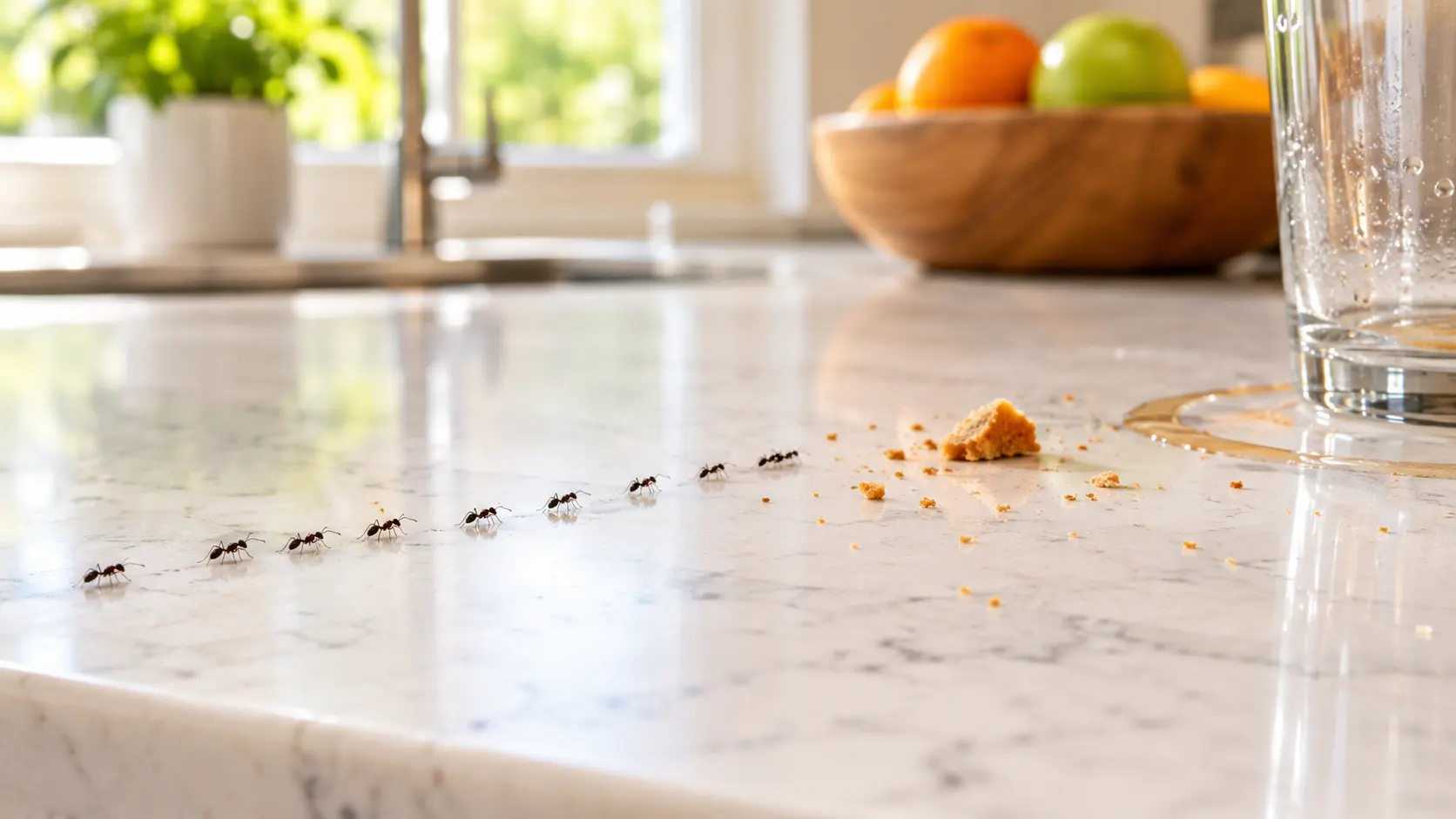
You walk into the kitchen and see a thin line of ants crossing the counter. It feels gross, and you want to know why it happened. So, what causes ants in the house? The short answer is food, water, and shelter. Ants come in when they find any of the three, and a tiny gap is all they need to get inside.
Dirt is not the main cause. A clean home can get ants too. Below, you will learn how they get in, what draws them, why they show up out of nowhere, and how to stop them.
What Causes Ants in the House? The Short Answer
If you ask why there are ants in your house, the answer is usually simple. Ants want food, water, a safe place to nest, or a break from bad weather outside.
It starts with one scout. A scout ant wanders around looking for a meal. When she finds a crumb, a sweet spill, or a drip of water, she heads back to her nest. On the way, she leaves a scent trail.
Other ants in the colony follow that trail. Within an hour, one lone ant can turn into a steady line. That is why a “few ants” can feel like an invasion by dinner time.
Here are the seven common reasons ants come inside:
- Small cracks and gaps in your walls and foundation
- Open food or crumbs
- Sticky spills and sweet residue
- Leaky pipes and damp spots
- Trash and recycling bins
- Outdoor nests close to the house
- Weather changes that push ants indoors
Let’s look at each one.
How Do Ants Get in Your House?
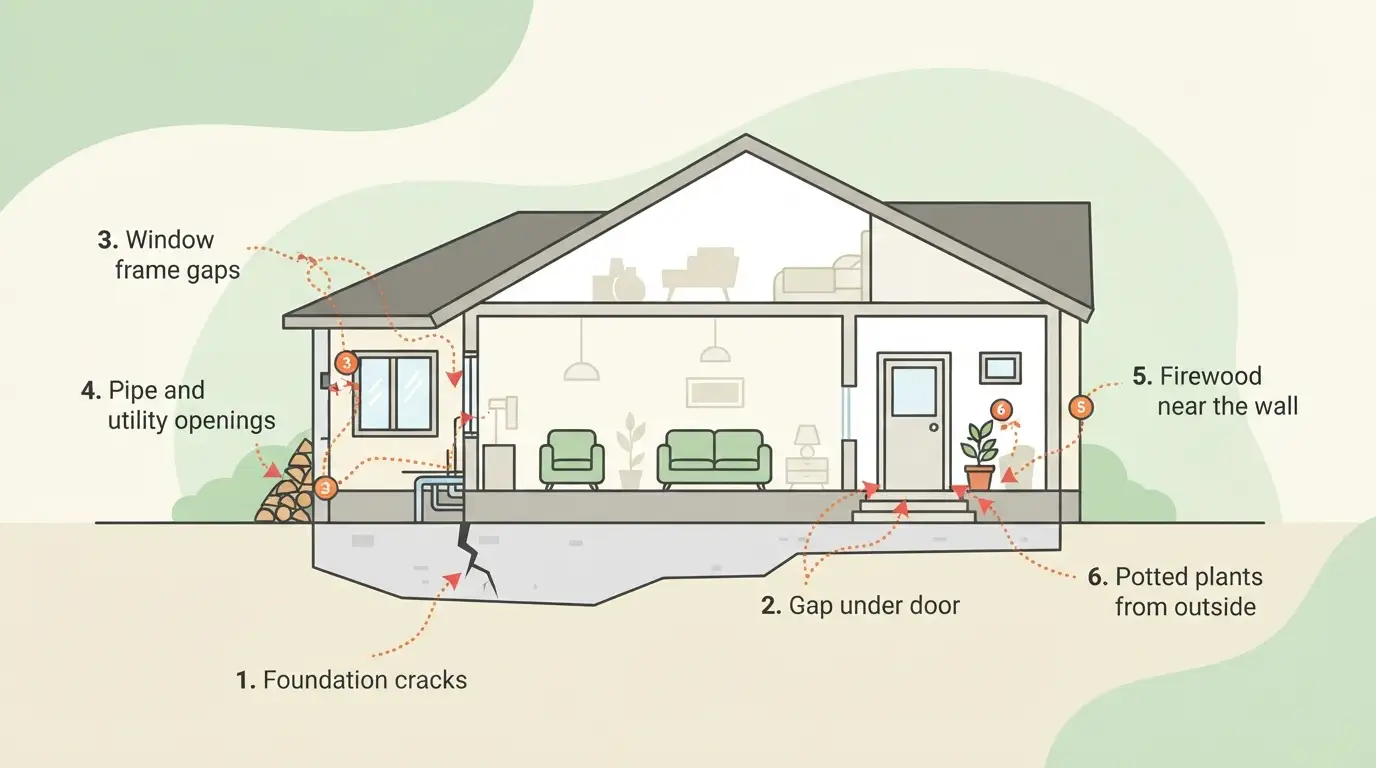
Ants are small. A worker ant can slip through a crack as thin as a credit card edge. You cannot see most of the entry points, but ants find them fast.
Cracks, Gaps, and Foundation Openings
Check the base of your home first. Hairline cracks in concrete, loose siding, and gaps around the foundation all work as doors for ants. Old caulk that has shrunk or split is another common spot.
Ants also follow pipes. Look where water lines and gas lines enter the wall. Those holes are often bigger than they should be.
Doors, Windows, and Utility Lines
Worn weather stripping leaves a thin gap under a door. Window frames that do not close tight do the same thing. Cable lines, AC lines, and dryer vents can also give ants a clear path.
Walk around your home on a sunny day. If you can see light through a gap, ants can walk through it.
Items Brought in from Outside
Sometimes you carry the ants in yourself. Common culprits include:
- Firewood stacked near the kitchen or garage
- Potted plants moved from the patio
- Grocery bags set on the ground first
- Cardboard boxes stored in a shed or garage
Check these items before you bring them in. Shake out plant pots and wipe down boxes. It takes a minute and can save you a lot of trouble.
What Attracts Ants in the House?
Ants need three things to live: food, water, and a place to nest. If your home offers any of them, you may see ants. This is the core of what attracts ants in the house.
Food Sources
Ants love sugar, but they also go for grease and protein. Watch for these:
- Crumbs under the toaster or stove
- Honey, syrup, or juice that dripped on a shelf
- Pet food left in the bowl all day
- Overripe fruit on the counter
- Open bags of sugar, cereal, or flour
- Grease on the stovetop or backsplash
Even a very small amount is enough. A scout ant can find a sticky ring left by a soda can.
Water and Moisture
Ants get thirsty, especially during dry spells. A leaky pipe under the sink is a big draw. So is a damp bathroom, a drip from the fridge line, or water that pools under a potted plant.
Condensation on cold pipes also counts. If a spot in your home stays wet, ants will likely find it.
Shelter and Nesting Spots
Some ants nest right in your home. They like wall voids, wood that stays damp, and the space around insulation. Outside, they nest in mulch, soil, rotting logs, and under stones near the foundation.
A nest close to your wall means a short walk to your kitchen.
Common Household Ant Types and What Draws Them
Different ants want different things. Here is a quick guide.
- Sugar ants. This is a casual name for ants that go after sweet foods. You will often see them near spills and fruit.
- Odorous house ants. They love sweets and moisture. They give off a rotten smell when crushed.
- Pavement ants. They nest in cracks in concrete and slip inside to look for greasy or sweet food.
- Carpenter ants. They do not eat wood, but they dig through it to build nests. They prefer wood that is damp or damaged.
Knowing the type helps you pick the right fix.
Why Do I Have Ants in My House When It’s Clean?
This is one of the most common questions people ask. Many believe ants only show up in messy homes. That is a myth.
Ants do not judge your cleaning habits. They follow their noses. A spotless kitchen can still have a faint sugar film on the counter or a few crumbs inside a cabinet seam. You may not see it, but ants can smell it.
Here are the hidden causes in a clean home:
- Outdoor nests. If a colony lives near your wall, scouts will check your home no matter how clean it is.
- Moisture problems. A slow leak behind a wall or under a sink gives ants water. This often goes unnoticed.
- Trash and recycling bins. Rinsed cans and bottles still hold sweet residue. A bin near the door can lead ants right inside.
- Plants and flowers. Some ants feed on sweet liquid from plant pests. Houseplants can bring them in.
So take a breath. An ant problem is not a sign that you failed at cleaning. It is a sign that ants found a way in and found something they like.
Why Are Ants Suddenly Appearing in My House?
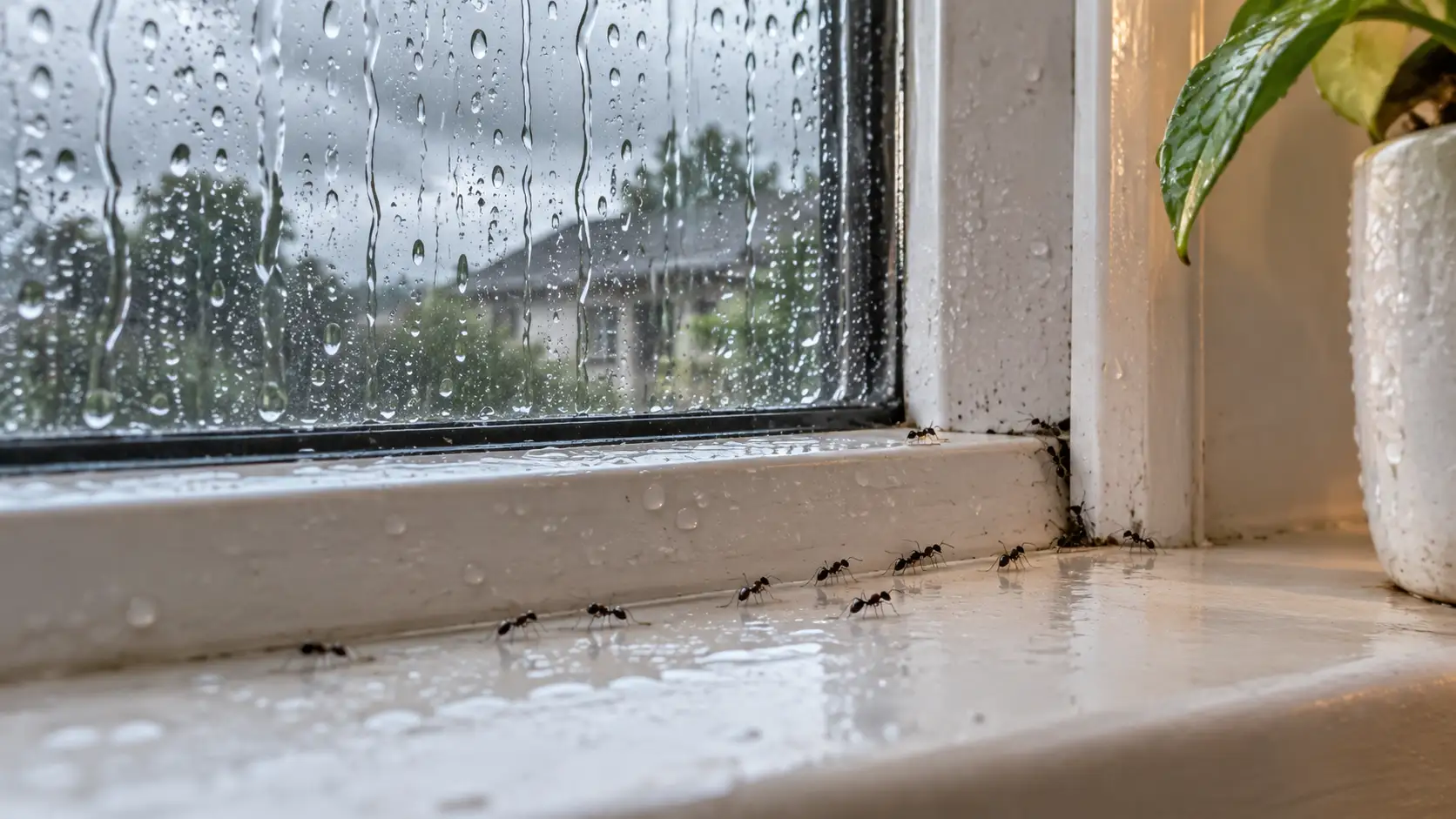
Ants rarely show up overnight. Scouts have often been around for days or weeks. You just did not notice them until the trail grew. Still, several things can trigger a sudden burst of ants.
Warm weather. Ants get busier when it warms up. Spring and summer are peak times for activity.
Heavy rain or flooding. Wet soil floods ant nests. The ants move to dry ground, which can be your house.
Drought. In very dry weather, ants hunt for water. Your sink and bathroom look like an oasis.
A new colony nearby. A fresh nest near your home means more scouts walking your way.
Yard work or building. Digging, moving mulch, or building next door can disturb nests. The ants move out and look for a new spot.
A new food or water source. A new pet bowl, a leaky faucet, or a bag of birdseed in the garage can start a trail fast.
If you think about what changed in the last week or two, you will often find the cause.
How to Stop Ants From Coming Back (and When to Call a Professional)
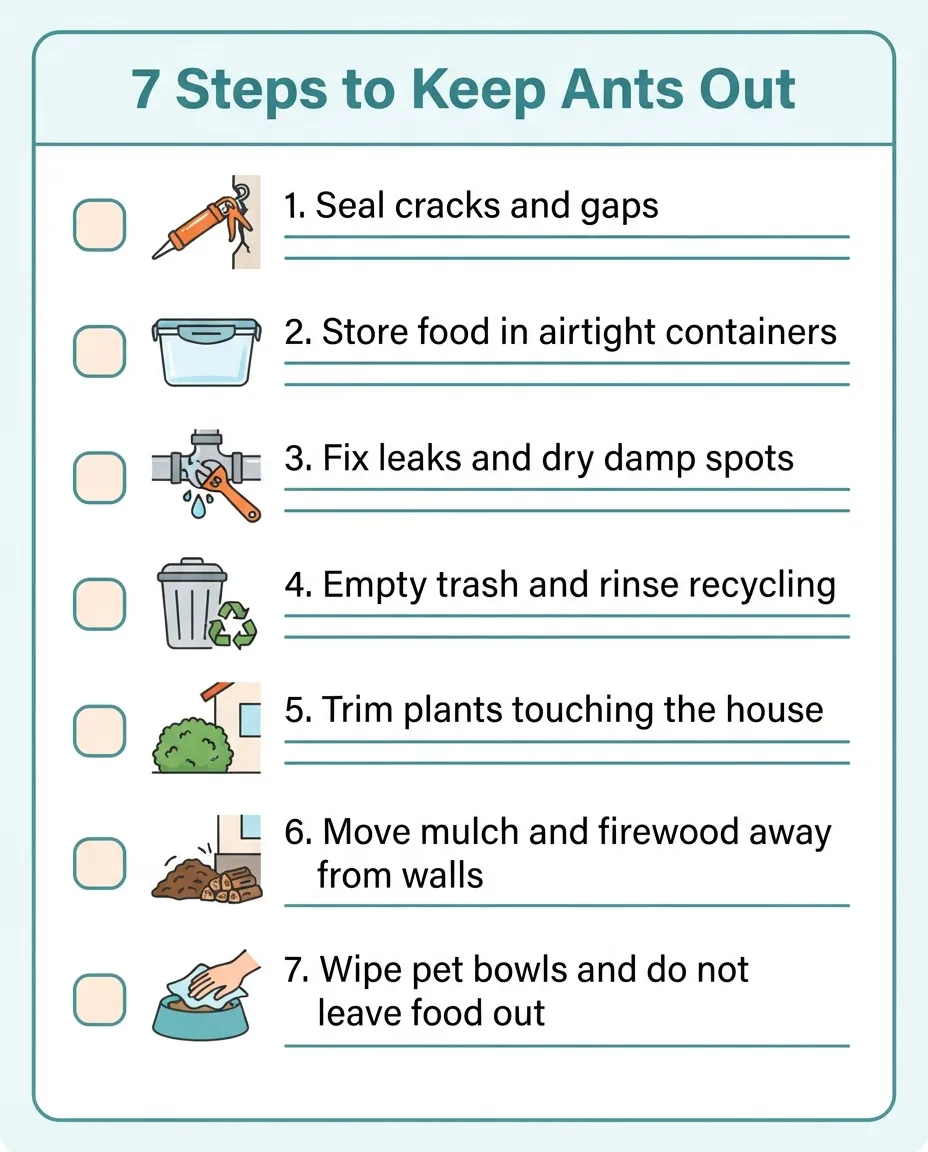
Once you know the cause, the fix is easier. Start with these steps.
Prevention checklist
- Seal cracks and gaps with caulk, especially around pipes, windows, and doors.
- Store food in airtight containers. Glass and hard plastic work well.
- Fix leaks and dry up damp spots.
- Take out the trash often and rinse recycling.
- Trim bushes and tree limbs that touch your house.
- Move mulch and firewood a few inches away from the foundation.
- Wipe pet bowls and do not leave food out all day.
Clean up the trail
Ants follow scent. If you wipe the trail with soapy water or a mix of vinegar and water, you break the path. Wipe the counters, the baseboards, and the spot where ants enter. Do this each day for a week.
DIY or professional?
Simple cleanup and sealing can solve a small problem. Store-bought baits can help too. But they do not always reach the nest. If the ants keep returning, you may be treating the symptom and not the source.
Call a pro when:
- The ants return again and again
- You see large numbers of ants, day after day
- You find sawdust-like debris near wood or windows
- You hear faint rustling in the walls
- You see winged ants indoors
- Wood looks damaged or hollow
These can be signs of carpenter ants, which can harm wood over time.
If you need help, our Residential Pest Control service at La Canada Pest Control finds where the ants are coming from and treats the real problem. We inspect your home, find the entry points, and give you a clear plan to keep ants out. Call La Canada Pest Control today to schedule your home inspection and take back your kitchen.
For more on ant biology and safe control methods, the EPA’s guide to safer pest control.
Conclusion: Understanding What Causes Ants in the House
Now you know what causes ants in the house. It comes down to food, water, shelter, and easy ways inside. A clean home can still have ants, because tiny crumbs, hidden leaks, and outdoor nests all count.
Check where ants are entering, clean up food crumbs, and seal any small gaps around your home. These simple steps can help prevent ants from coming back. Still dealing with ants? Contact us today for help getting the problem under control.
FAQs
Why are there ants in my house all of a sudden?
Weather shifts, new food or water sources, or a nearby colony are the usual causes. Scouts are often there for days before you spot a trail.
Can ants come in even if I keep my kitchen spotless?
Yes. Ants can smell tiny crumbs and sticky film you cannot see. They also come in for water or to escape rain and heat outside.
Do ants in the house mean there’s a nest inside?
Not always. Most ants you see are workers from a nest outside. If you see ants all year, or winged ants indoors, a nest may be inside.
What household items attract ants the most?
Sweets like sugar, honey, and juice top the list. Pet food, grease, ripe fruit, and open pantry items also draw them. Leaky pipes attract ants that need water.
Are ants in the house dangerous?
Most house ants do not bite or spread serious disease. They can contaminate food, though. Carpenter ants can also damage wood over time.
How can I tell if I have a carpenter ant problem?
Look for piles of sawdust-like debris, wood that sounds hollow, and large black or reddish ants. You may also hear faint rustling in the walls. A pro can confirm it.